What an inventory system is actually for
Most businesses do not begin with an inventory system. They begin with a spreadsheet, a stock room somebody knows by heart, and the habit of checking before promising anything. That holds until the spreadsheet and the shelf disagree, and from then on nobody is certain which version of the truth to act on.
An inventory system exists to settle that argument. It holds items, locations, quantities and the events that changed them, then applies an agreed rule for what may be promised to a customer. Reorder alerts, valuation reports and stock dashboards are all views of that record. When the record is wrong the views are confidently wrong, which does more damage than a spreadsheet nobody trusted in the first place.
This page covers the stock side: items, locations, movements, reservations, adjustments, permissions, counting and reporting. The storefront, the basket and the money belong to e-commerce website development and payment and checkout. Those systems consume stock and ask questions of it. Neither should be the place stock is defined.
It is worth saying early that a packaged product is often the cheaper answer. If you sell a few hundred lines from one location under ordinary rules, an off-the-shelf tool will do more on its first day than a custom build can justify, and we will tell you so. A custom system earns its place when the rules are genuinely yours: allocation by customer, stock committed against contracts, assembled or kitted goods, or a process no product supports without being bent out of shape.

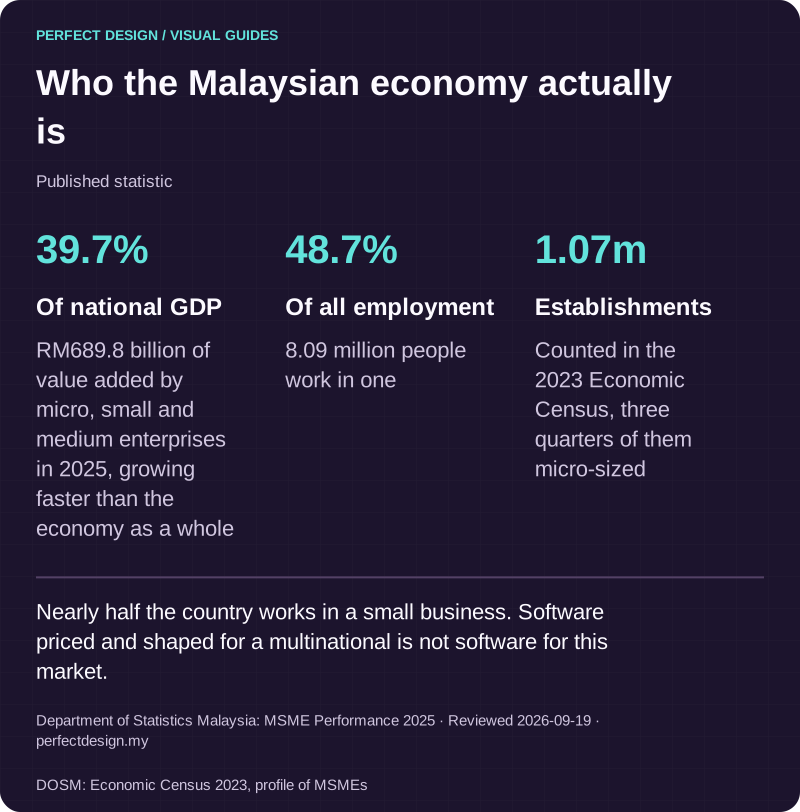
Who the Malaysian economy actually is
Published statistic. Nearly half the country works in a small business. Software priced and shaped for a multinational is not software for this market.
Source: Department of Statistics Malaysia: MSME Performance 2025. Reviewed .
Also: DOSM: Economic Census 2023, profile of MSMEs.
Read the graphic as text
- Of national GDP: 39.7%. RM689.8 billion of value added by micro, small and medium enterprises in 2025, growing faster than the economy as a whole
- Of all employment: 48.7%. 8.09 million people work in one
- Establishments: 1.07m. Counted in the 2023 Economic Census, three quarters of them micro-sized
One stock record, or none at all
Before anything is built, decide which system is allowed to be right. Stock tends to exist in several places at once: the online shop, the point of sale, the accounting package, a warehouse sheet and somebody's memory. If two of them can both change a number, they will drift apart, and reconciling them by hand becomes a permanent job nobody was hired to do.
The answer is one authoritative record and a defined direction of travel for everything else. Other systems may read from it, and they may raise events that change it, but only one of them holds the number. That single decision removes more future pain than any feature on the requirements list.
Physical, reserved and available are three different numbers
A stock record carrying one quantity will mislead you. Useful systems distinguish at least three figures, and they state in writing how the third is calculated.
- Physical stock is what is on the shelf, by location. It changes only when goods actually move, are counted, or are written off.
- Reserved stock is physical stock already spoken for: a paid order, a confirmed transfer, a quotation you honour for a fixed period. It is still in the building and it is not yours to sell twice.
- Available stock is what you are prepared to promise, and it is a policy rather than a fact. Usually physical minus reserved, sometimes minus a safety buffer, sometimes plus goods on a purchase order with a delivery date attached.
- Incoming and quarantined stock sit outside the available figure until somebody decides otherwise. A returned item nobody has inspected is not sellable, whatever the courier tracking says.
Two rules have to be agreed with you rather than assumed: whether stock may ever go negative, and what happens when two orders arrive for the last unit within the same second. Both have reasonable answers. Neither has a default we should be choosing on your behalf.

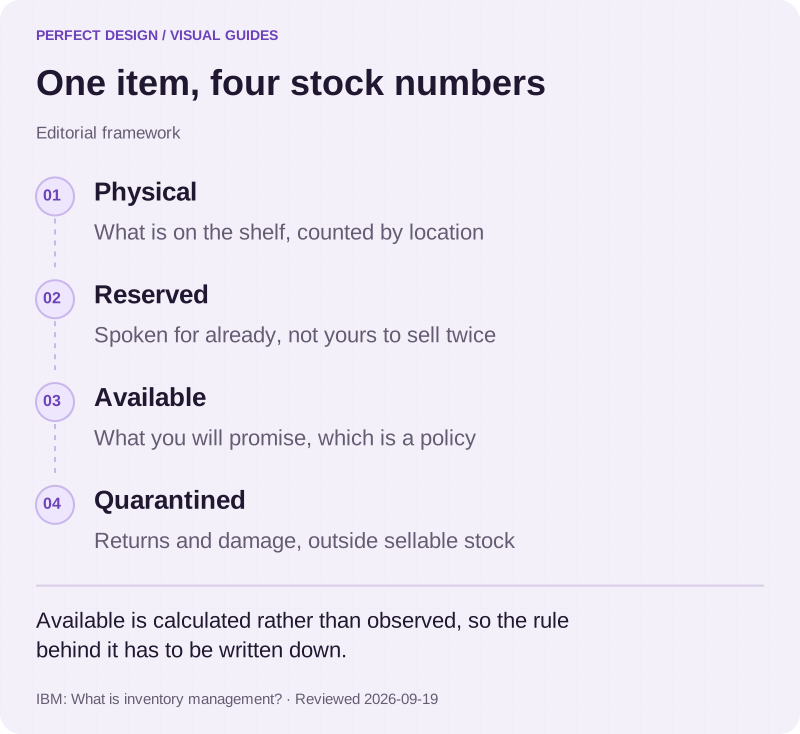
One item, four stock numbers
Editorial framework. Available is calculated rather than observed, so the rule behind it has to be written down.
Basis: IBM: What is inventory management?. Reviewed .
Read the graphic as text
- Physical. What is on the shelf, counted by location
- Reserved. Spoken for already, not yours to sell twice
- Available. What you will promise, which is a policy
- Quarantined. Returns and damage, outside sellable stock
How stock actually moves
The clearest way to scope an inventory system is to walk one item through its life and write down what the system does at each step, who did it, and what happens when the step goes wrong. The table below does that for a fictional single-warehouse retailer. The roles, policies and responses are assumptions used for illustration, and the last column describes evidence to collect at acceptance rather than tests anybody has passed.
| Workflow step | Assumed actor | Proposed system response | Exception | Acceptance evidence to collect |
|---|---|---|---|---|
| Receive a delivery | Warehouse clerk | Record the item, the location and the counted quantity against the purchase order | A short or damaged delivery stays separately recorded rather than being rounded quietly to the expected figure | Receipt records, discrepancy notes and the location each unit landed in |
| Reserve an order | Order service | Reserve the agreed quantity without assuming the goods have shipped | Competing orders exceeding available stock need an agreed rejection, backorder or first-paid rule | Concurrent-order tests and a reservation reconciliation against the ledger |
| Inspect a return | Warehouse reviewer | Decide restock or quarantine before the available figure changes | A damaged return stays outside sellable stock until somebody accepts the write-off | Inspection decisions and a stock-ledger reconciliation for each outcome |
Transfers, picks, dispatches and quarantine decisions have the same shape: each is a state transition with an actor, a time and a reason. Modelling them as events rather than as edits to a number is what makes the history useful later, because every figure can then be explained by the entries that produced it.
Where stock has to reach an accounting package, a point of sale or a storefront, the questions are always the same four: which system owns the fact, what triggers a change, which direction the data moves, and who investigates when the two disagree. CRM and integrations covers how we approach those connections, including what has to be confirmed before anyone promises one exists.

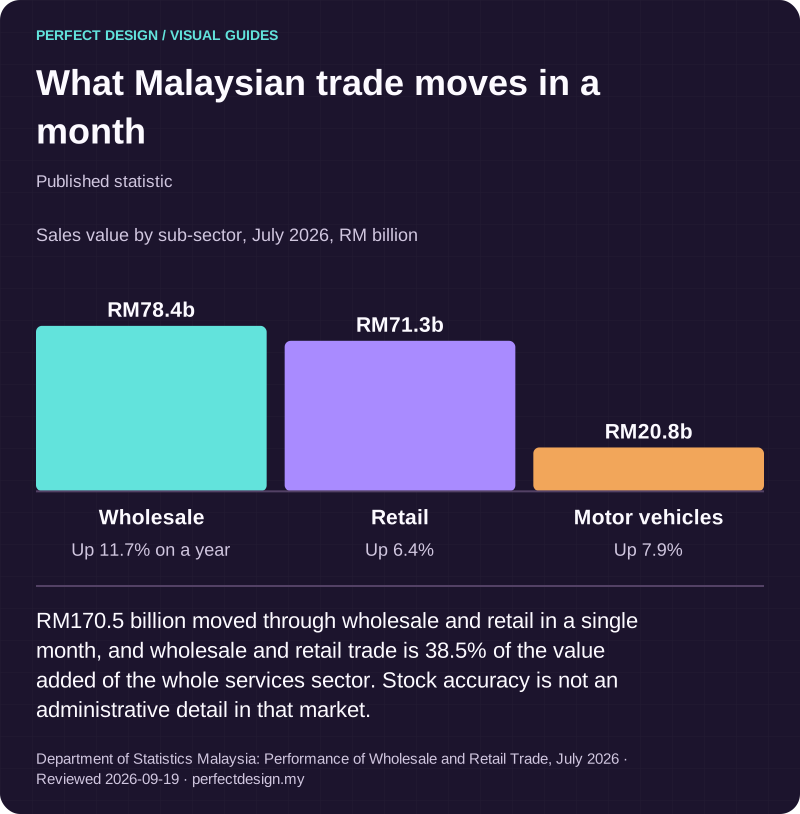
What Malaysian trade moves in a month
Published statistic. RM170.5 billion moved through wholesale and retail in a single month, and wholesale and retail trade is 38.5% of the value added of the whole services sector. Stock accuracy is not an administrative detail in that market.
Source: Department of Statistics Malaysia: Performance of Wholesale and Retail Trade, July 2026. Reviewed .
Read the graphic as text
- Wholesale: RM78.4b. Up 11.7% on a year
- Retail: RM71.3b. Up 6.4%
- Motor vehicles: RM20.8b. Up 7.9%
Chart scale: Sales value by sub-sector, July 2026, RM billion.
Who is allowed to change a number
Stock permissions follow your business process rather than a copied role list. The useful exercise is naming who, in your operation, may do each of these things, and who reviews them afterwards.
- Receive goods and record a discrepancy against a delivery
- Reserve, release or override a reservation
- Move stock between locations and confirm it arrived
- Count a location and submit the result
- Approve an adjustment, particularly one carrying a value
- Decide whether a damaged or returned item ever becomes sellable again
The pattern that survives contact with a real warehouse is that ordinary movement stays fast and unremarkable, while anything that changes value or overrides a rule needs a second person and a stated reason. Every material change records who made it, when, what the figures were before and after, and why. That history is what turns an argument about stock into a five-minute look at the ledger.

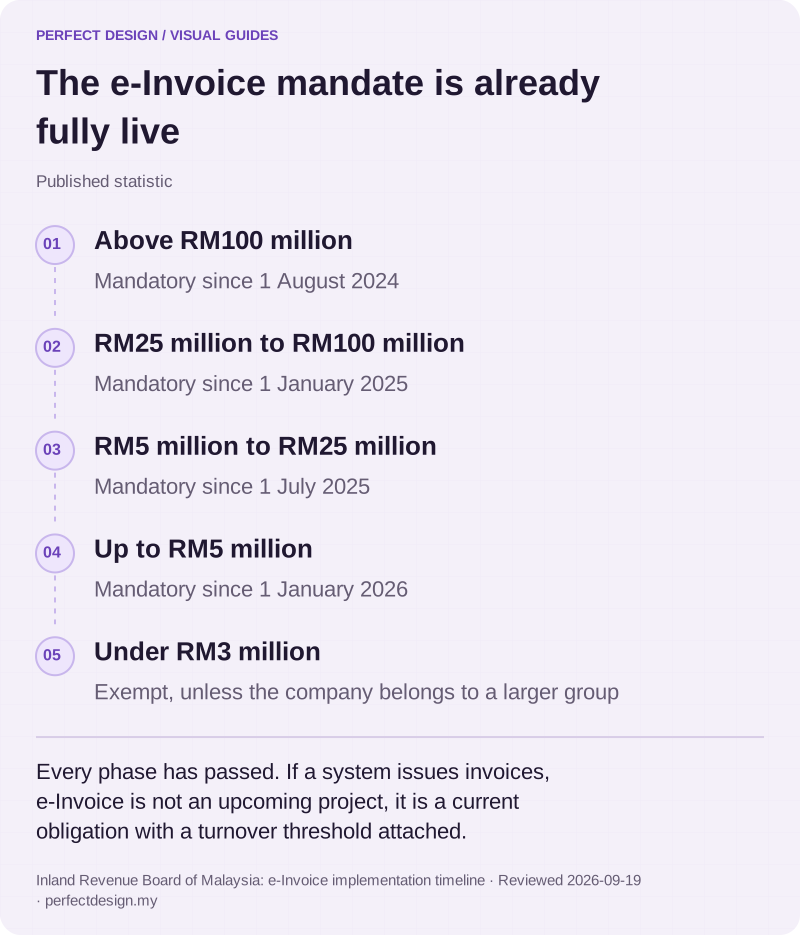
The e-Invoice mandate is already fully live
Published statistic. Every phase has passed. If a system issues invoices, e-Invoice is not an upcoming project, it is a current obligation with a turnover threshold attached.
Source: Inland Revenue Board of Malaysia: e-Invoice implementation timeline. Reviewed .
Read the graphic as text
- Above RM100 million. Mandatory since 1 August 2024
- RM25 million to RM100 million. Mandatory since 1 January 2025
- RM5 million to RM25 million. Mandatory since 1 July 2025
- Up to RM5 million. Mandatory since 1 January 2026
- Under RM3 million. Exempt, unless the company belongs to a larger group
Counting, discrepancies and the recheck nobody builds
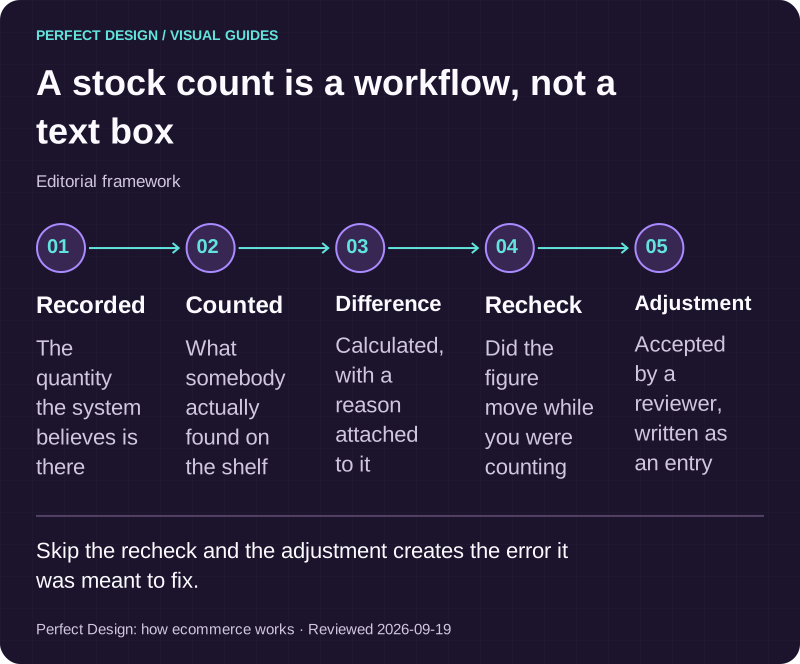
A count is a workflow, not a text box. The system holds a recorded quantity, somebody counts the shelf, the difference is calculated, a reviewer accepts or rejects it, and the accepted adjustment is written to the ledger as its own entry with a reason attached. Rolling counts by location or by value band are usually kinder to an operation than closing the warehouse once a year, and they surface problems while the cause is recent enough to find.
Reporting then follows the same record: movement history by item or location, adjustments by reviewer and reason, ageing stock, items that repeatedly disagree with their count, and open exceptions nobody has closed. A report earns its place at the point where somebody acts on it, which is why we build these views into the operation rather than as decoration. Admin dashboards covers the staff-side surface in more detail.

A stock count is a workflow, not a text box
Editorial framework. Skip the recheck and the adjustment creates the error it was meant to fix.
Basis: Perfect Design: how ecommerce works. Reviewed .
Read the graphic as text
- Recorded. The quantity the system believes is there
- Counted. What somebody actually found on the shelf
- Difference. Calculated, with a reason attached to it
- Recheck. Did the figure move while you were counting
- Adjustment. Accepted by a reviewer, written as an entry
Stock in more than one place
Once stock sits in more than one location, three questions decide the design. Does a customer buy from a specific location or from the total? Is stock in transit between branches owned by the sender, the receiver or neither? And can one branch see another branch's figures, or only that stock exists somewhere in the network?
Selling against a total is convenient and quietly dangerous, because a promise made against a total is fulfilled from a place. If a branch can be the source of an order, it needs a way to accept or decline that job. Multi-location scope also decides how counting works: counts are per location and the totals are derived.
What to bring to a scoping conversation
Bring your item list and how it varies, your locations, the events that change stock today and who performs them, the availability rule you want to promise against, the exceptions that already cause arguments, the systems that must be connected and who controls their access, and the tests you would want to see before accepting the work. That is enough to size a build honestly. If you would rather start from the current process, talk it through with us and we will say where a product would serve you better than a build.